
Research
Staff and postgraduate students in the School of Mathematics and Statistics collaborate in cross-disciplinary research projects across a range of subjects.
Researchers in the School of Mathematics and Statistics work in a diverse range of subject areas, in pure and applied fields. Staff and postgraduate students publish and present their work in international journals and conferences.
Staff in the School have had particular success in securing research funding from the Marsden Fund in areas such as Matroid Theory, C*-algebras, Computability, Logic, General Relativity and Stochastic Processes.
Staff and students collaborate in cross-disciplinary projects in education, biology, physics, medicine, computer science, economics and many other areas.

Applied mathematics
Applied mathematics ranges from theoretical physics to industrial mathematics and from geophysics to fractal geometry. The ideas involved are equally varied.
Data science
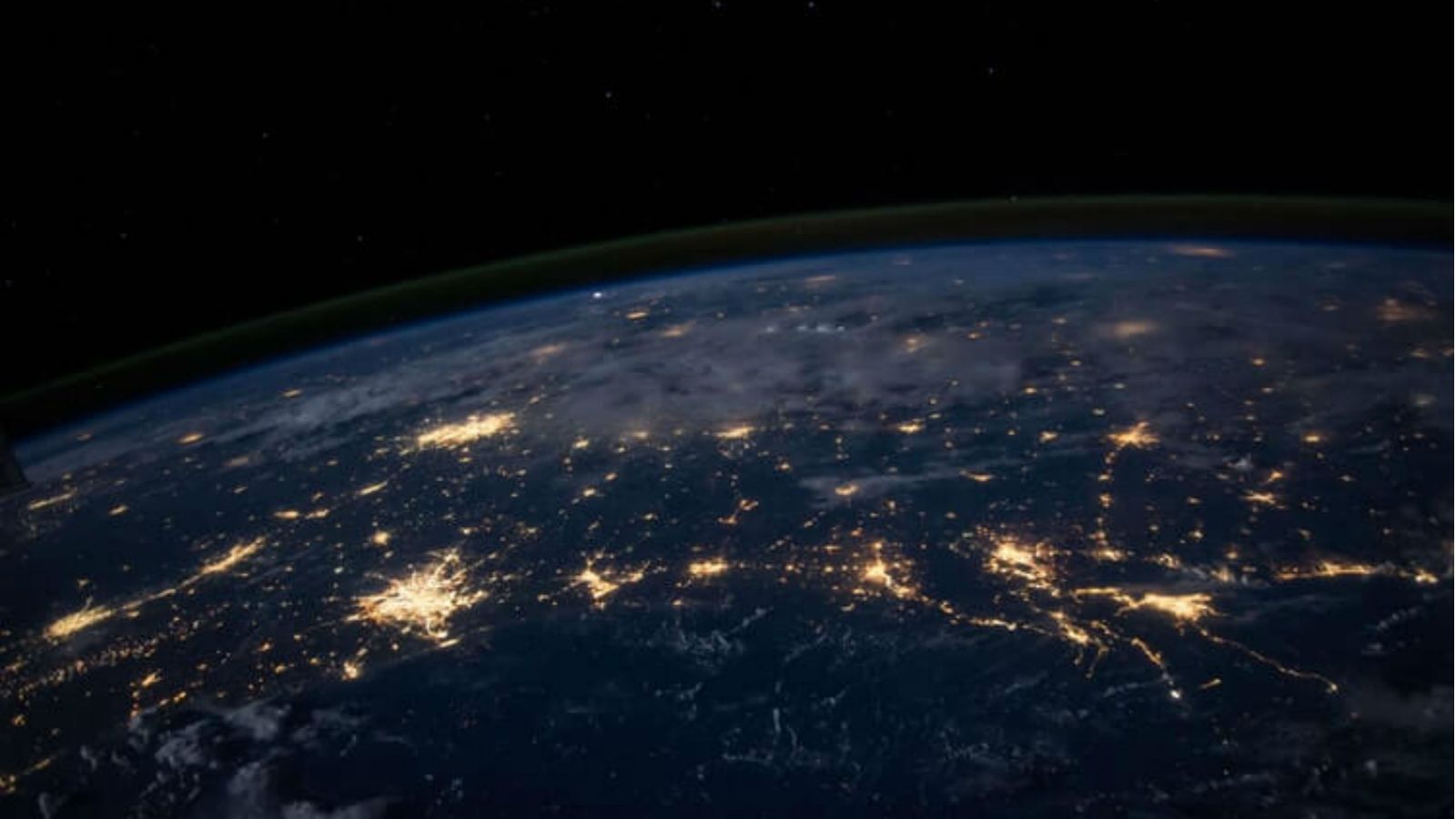
Data science fuses mathematics, statistics, and computer science, using aspects of all three disciplines to gain insight from data sources of all kinds.

Geometry and analysis
Mathematicians researching geometry and analysis are undertaking projects with postgraduate opportunities.

Logic and algebra
Research in the Logic and Algebra Group builds on ideas from combinatorics, mathematical logic, and general algebra.

Probability and statistics
Research in the Statistics Group covers a wide range of areas in both theoretical and applied probability and statistics.

Statistical advice for researchers
Our statistical consulting service is available for staff, students, and external organisations to help with planning your study and analysing your data.
Mathematics Academic Staff
| Name | Research interests | |
|---|---|---|
| Dr Nick Brettell | Matroid theory, Graph theory, Algorithms | |
| AProf Lisa Orloff Clark | Functional analysis, operator algebras, associative rings and algebras | |
| Dr Peter Donelan | Singularities of robot kinematics, invariant theory, pseudoinverses for non-Riemannian metrics | |
Theory of computation, computability and parametrized complexity, reverse mathematics, algorithmic information theory | ||
| Dr Petro Feketa | Stability theory, nonlinear control, hybrid and discontinuous dynamical systems | |
Mathematical logic, general algebra | ||
Computability theory, set theory | ||
| Dr Brendan Harding | Inertial migration of particles in microfluidic devices, Fault tolerance algorithms for high performance computing, Fractal transformations | |
Fluid mechanics | ||
| Prof Astrid An Huef | Functional analysis, operator algebras, associative rings and algebras | |
Number theory | ||
| Prof Stephen Marsland | Shape Analysis, diffeomorphism groups, Machine learning, complexity | |
Matroid theory, graph theory, computational complexity, computability theory, finite model theory | ||
Mathematical modelling, differential equations, industrial and geophysical mathematics, biomathematics | ||
| Dr Sasha Melnikov | Mathematical logic, computability theory, computable algebraic and metric structures, abelian groups. | |
Numerical analysis of partial differential equations, fluid mechanics, scientific computation and nonlinear waves | ||
| Dr Hung Pham | Banach algebras, abstract harmonic analysis | |
| Dr Dan Turetsky | Computability Theory | |
General relativity, quantum field theory, theoretical cosmology | ||
| Prof Geoff Whittle | Matroid theory, combinatorics | |
Statistics Academic Staff
| Name | Research interests | |
|---|---|---|
| Dr Ryan Admiraal | Social network analysis, disease modelling | |
Bayesian statistics, reliability, applications to geophysics (statistics of oriented objects), applications to fisheries (population models) | ||
| Warranty Analysis, reliability | ||
| Prof Alejandro Frery | Statistical Computing; Signal, Image, and Network Analysis; Data Analysis; Synthetic Aperture Radar (SAR) imagery | |
Time series analysis, seasonal modelling, forecasting and statistical applications | ||
| Dr Yuichi Hirose | Deep learning, Deep generative model, probabilistic machine learning. | |
Asymptotic methods of statistics, random processes, Statistical modelling and applications | ||
Categorical data analysis | ||
| Dr Louise McMillan | model-based clustering, statistical ecology, specifically population genetics. | |
| Dr Binh Nguyen | Image Analysis and Visualization, Health Data Sciences and Informatics, Machine Learning | |
| Dr Thuong Nguyen | Asymptotic statistics | |
Biometrics | ||
| Dr Nokuthaba Sibanda | Bayesian inference, Spatial statistics, Bayesian modelling in fisheries and healthcare | |
Communications, signal processing | ||
Optimal stopping of Levy processes, probability applied to financial economics and actuarial science | ||
| Dr Yuan Yao | Statistical learning, High-dimensional data analysis, Survival analysis, Empirical processes | |